Stuttgart Airport / Flughafen Stuttgart GmbH
High: security-control handover in 2026, hydrogen demonstrator involvement, and compact airport where integrated cyber-safety-sustainability support can be tangible.
Target lead / route-in
Ulrich Heppe, CEO / Managing Director Aviation; Florian Frech, Head of IT mentioned.
Best opening thesis
Position Airbus Protect as a European aviation-specialist resilience partner that can connect cyber, safety, operations, sustainability and regulation into one practical executive roadmap.
Suggested first offer
Security-control transition assurance: process risk, cyber requirements, supplier controls, incident playbooks and operational continuity.
Contact people / public profile photos
Photos are from public official/media/profile pages where a reliable embeddable image was found. For some operational contacts, only profile pages were found, not a reusable public image.
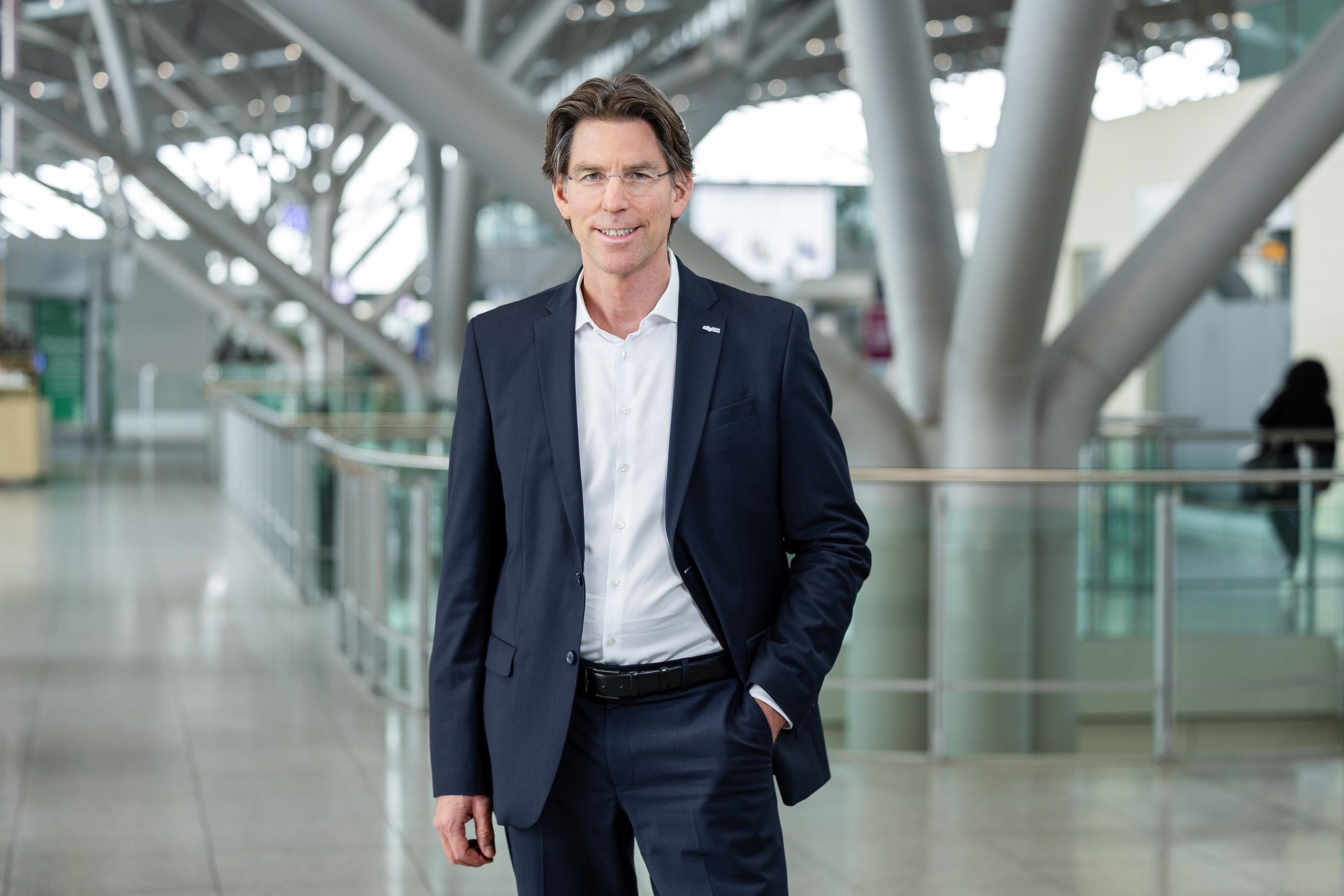
Florian Frech
Public podcast/profile references found; no stable embeddable headshot source found.
1. Why this prospect matters now
- Official profile states Ulrich Heppe is CEO and responsible for aviation, operations, security, safety, finance, communications, procurement, law and HR.
- Stuttgart Airport will take over control of security checks from November 2026; public reporting links this to efficiency in handling chains during peak times.
- Stuttgart participates in the GOLIAT liquid-hydrogen aviation project; Heppe positioned hydrogen as central to sustainable travel and airports as enablers.
- Passenger recovery is challenged by regional economic conditions, increasing pressure on efficient, reliable operations.
2. Likely business / risk triggers
- Security-check takeover changes operational responsibility, process ownership and IT/OT risk profile.
- Hydrogen demonstration and future infrastructure require safety cases, permitting, emergency response and cyber-physical risk management.
- Smaller management bandwidth compared with mega-hubs: pragmatic packages and co-delivery matter.
3. Airbus Protect service proposals
| Proposal | Why it fits | Commercial shape |
|---|---|---|
| Security-control transition assurance | Security-control transition assurance: process risk, cyber requirements, supplier controls, incident playbooks and operational continuity. | Start with a 2–6 week diagnostic/workshop, then convert to roadmap, implementation support, managed service or periodic assurance. |
| Hydrogen airport readiness package | Hydrogen airport readiness package: LH2/H2 safety modelling, emergency concept, security-by-design and staff training. | Start with a 2–6 week diagnostic/workshop, then convert to roadmap, implementation support, managed service or periodic assurance. |
| OT cybersecurity quick scan for security lanes, baggage, access control, building systems and airside energy assets. | OT cybersecurity quick scan for security lanes, baggage, access control, building systems and airside energy assets. | Start with a 2–6 week diagnostic/workshop, then convert to roadmap, implementation support, managed service or periodic assurance. |
| Executive tabletop | Executive tabletop: peak-day disruption combining security queue failure, cyber incident and media pressure. | Start with a 2–6 week diagnostic/workshop, then convert to roadmap, implementation support, managed service or periodic assurance. |
4. Why Airbus Protect is the right partner
Airbus Protect combines aviation-domain safety know-how, cybersecurity, sustainability and resilience services. Official pages position Airbus Protect as supporting aviation across IT/OT convergence, ground operations, Part‑IS, product/system security, MDR/SOC, offensive security, business continuity and sustainable aviation transition.
Relevant Airbus Protect capabilities
- Part‑IS gap analysis, ca‑ISMS design, pre-audit and training
- SOC/MDR for airport critical infrastructure with darknet/digital-risk monitoring and incident hotline
- OT/industrial cybersecurity for baggage, apron, energy, building-management and security-screening environments
- Red-team/purple-team exercises tailored to airport scenarios
- BCP/crisis tabletop exercises including cyber, drone, severe weather and supplier outage scenarios
- Hydrogen/SAF/electrification safety, risk assessment and permitting support
- Sustainability governance, climate resilience and infrastructure risk analysis
5. Conversation guide for Prague
Opening
“We help aviation organisations make innovation and sustainability transformation resilient by design — not only compliant, but operationally robust.”
Questions
- What keeps you most concerned about taking over security-check control: operations, suppliers, cyber, staffing or evidence to authorities?
- Would a short, practical H2 airport-readiness workshop support your GOLIAT learning curve?
- Can we help Florian Frech translate IT risks into operational resilience language for the management board?
Next step to propose
Offer a short executive workshop after ACI: map current initiatives, identify 3–5 cyber/safety/sustainability risk hotspots, and define a concrete 90‑day support roadmap.
6. Internal pursuit notes
Stakeholder hypothesis
CEO/COO cares about resilience, passenger experience, regulatory trust, sustainability and reputation. CISO/CIO cares about risk visibility, third-party exposure, evidence, incident response and architecture. Operations/security/safety care about continuity and practical procedures.
Qualification checklist
- Is there an active Part‑IS/NIS2 programme and who owns it?
- Which OT domains are monitored by SOC today?
- How are third-party airport service providers assessed?
- What critical transformation project needs independent assurance in 2026?
- Is there appetite for a tabletop exercise with executive participation?
Sources used
- Stuttgart management
- Stuttgart security checks
- Stuttgart GOLIAT H2
- Airbus Protect H2 safety
- Airbus Protect cybersecurity
Prepared from public web sources available on 22 June 2026 plus the prospect/context email supplied by Lukas Weber. Treat as an engagement briefing, not as confidential customer intelligence.